
How Often Should You Really Mow During Florida's Growing Season?
July 5, 2026
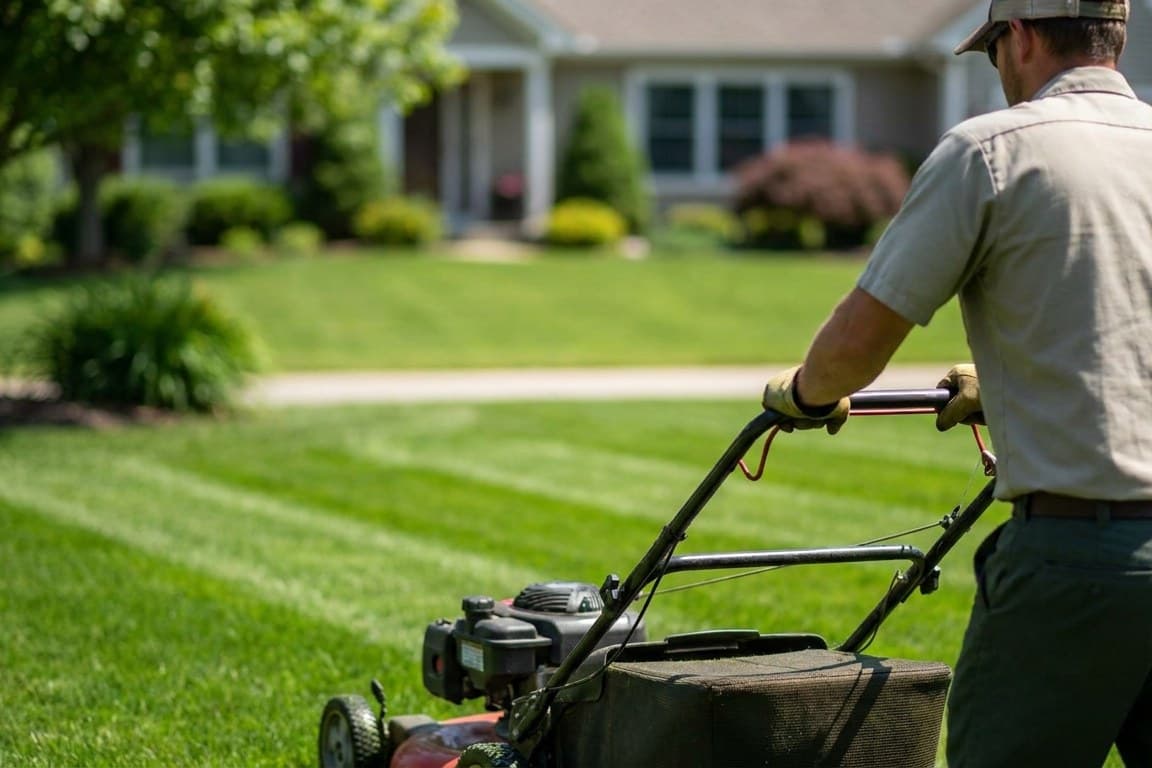
"How often should I mow?" doesn't have one single answer in Florida, because the honest answer is: it depends on how fast your grass is growing right now, not what day of the week it is. Still, most St. Petersburg homeowners end up somewhere close to a regular pattern once they know what to watch for.
Growing season vs. slower months
During the warm, wet months, roughly spring through early fall, St. Augustine grass in St. Petersburg often needs mowing every week. Heat and near-daily rain push growth fast, and a lawn that goes two weeks between cuts in the middle of summer usually looks noticeably shaggy by the end of that stretch.
During the cooler, drier months of winter, growth slows down a lot. Many lawns can stretch to every other week, or even longer, without looking overgrown. There's no need to keep a summer schedule going once the grass itself has slowed down. You'll just be mowing very little grass and wasting a Saturday morning.
Watch the grass, not the calendar
The most reliable way to know it's time to mow is the one-third rule: mow before you'd need to remove more than about a third of the blade's height to get back to your target cut. For a lawn kept around 4 inches, that generally means mowing once it reaches somewhere around 5 to 5.5 inches.
If you find yourself checking the calendar instead of the grass, a simple habit helps: glance at the lawn every few days rather than waiting for a specific day of the week. In peak summer growth, that might mean mowing weekly without really thinking about it. In winter, you might glance at it and realize two or three weeks have gone by and it still looks fine.
Signs you waited too long
- The lawn looks noticeably shaggy or uneven, especially compared to right after the last mow
- Grass is bending over instead of standing upright
- You can see a big difference in height between the mowed edges (like along a walkway) and the middle of the yard
- The mower bogs down or leaves visible clumps of clippings behind
Any of these usually means you've gone past the point where a single mow will look clean. You may need to bring the height down gradually over two mows instead of one, especially if it's grown a lot more than usual.
What happens if you mow too often
It's possible to overdo it, too. Mowing constantly when the grass genuinely hasn't grown much stresses the lawn without giving it any benefit, and it just means more work for you. If you're mowing every few days and barely removing any clippings, that's a sign you can stretch the interval out a bit.
It's easy to overcorrect in either direction
Some homeowners, worried about letting the lawn get away from them, end up mowing every few days out of habit rather than need, which just adds unnecessary work without any real benefit to the grass. Others let a busy month slip by and end up needing two shorter mows instead of one to catch back up safely. Neither extreme is a disaster, but paying attention to the grass itself, rather than defaulting to a fixed number of days, avoids both problems.
A practical rhythm for St. Petersburg
- Spring through early fall: plan on weekly mowing as your default, adjusting for heavy rain weeks
- Winter: every other week or longer is often enough: let the grass tell you
- Anytime: use the one-third rule instead of a fixed number of days
Keeping it simple
Most homeowners don't want to think about mowing frequency at all. They just want the yard to look good every week without having to plan around it. That's the whole idea behind a set weekly or bi-weekly plan: someone else is watching the grass and adjusting the schedule so you don't have to.
DemoMowCo builds your visit schedule around how your specific lawn grows through the seasons. Reach out to get started.